Introduction
If you are a CDL driver dealing with a drug or alcohol violation, understanding the Certified Substance Abuse Professional (SAP) Program is not optional, it is the only path back to safety-sensitive work. In 2026, enforcement has become stricter, reporting is faster, and employers rely heavily on compliance records before hiring.
A single failed or refused DOT test can immediately remove you from duty and place your career on hold. The only way to return is by completing the SAP process correctly and without delays.
This complete guide explains how the Certified SAP program works, what steps you must follow, how long it takes, and how to get back on the road as quickly as possible.
What Is the Certified SAP Program?
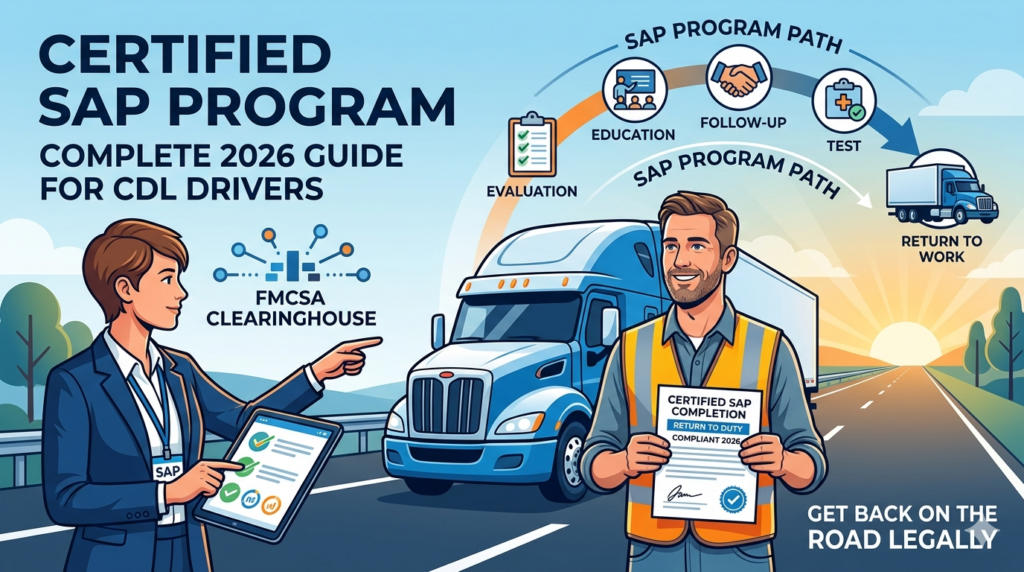
The Certified Substance Abuse Professional (SAP) Program is a federally mandated process for CDL drivers who violate DOT drug and alcohol regulations.
It is regulated by the Federal Motor Carrier Safety Administration and tracked through the FMCSA Clearinghouse.
A Substance Abuse Professional is a qualified expert responsible for evaluating drivers and guiding them through the return-to-duty process.
When Is the SAP Program Required?
You must enter the SAP program if you:
- Fail a DOT drug or alcohol test
- Refuse to take a required test
- Violate DOT substance use policies
Once any of these occur, your status is marked as “prohibited”, and you cannot perform safety-sensitive duties.
Why the SAP Program Matters in 2026
The SAP program is not just a requirement, it directly determines whether you can continue your CDL career.
Key Reasons It Matters
- Immediate removal from duty after violation
- No legal way to return without SAP completion
- Employers check Clearinghouse before hiring
- CDL downgrade risk if you delay the process
In 2026, there is no workaround. Completing the SAP program is the only path back to work.
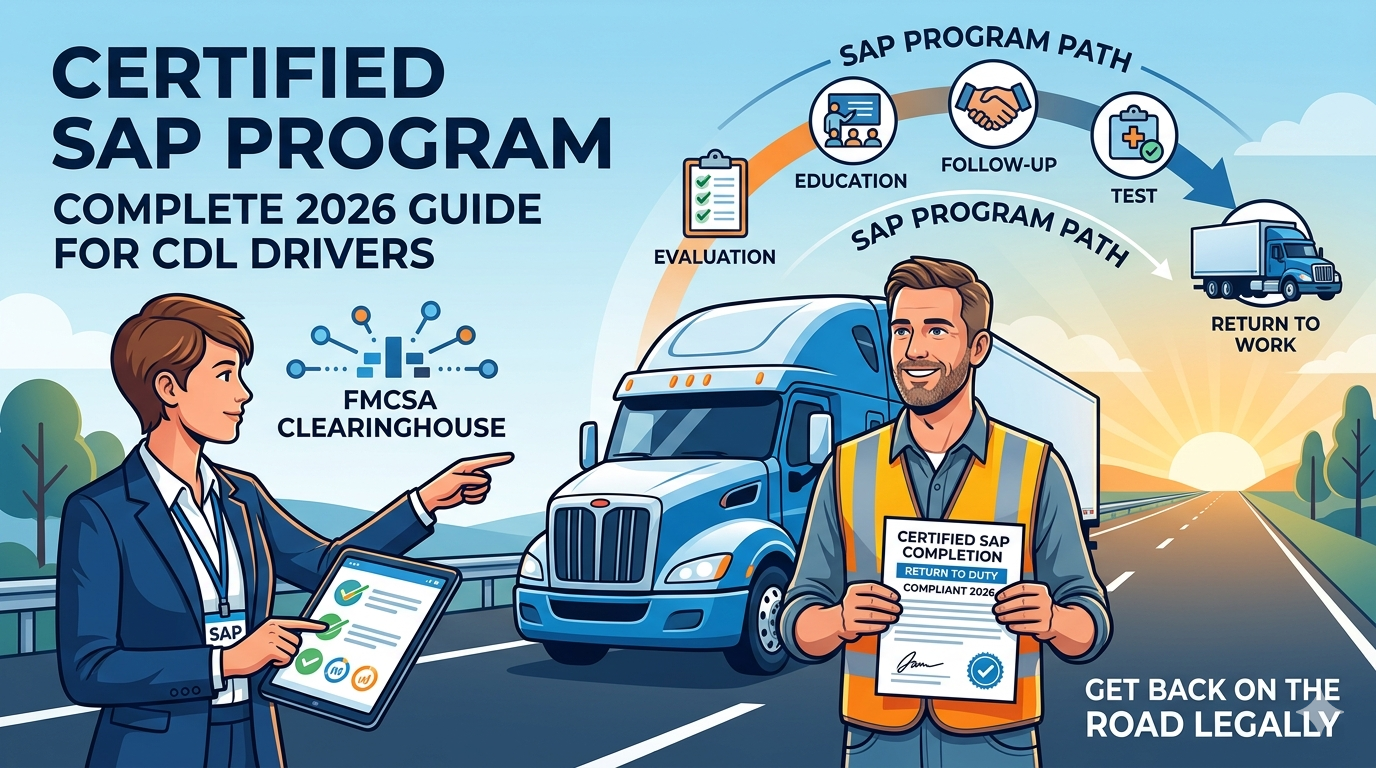
Step-by-Step SAP Process for CDL Drivers
Understanding each step helps you avoid delays and complete the process faster.
Step 1: Check Your Clearinghouse Status
After a violation, log into the FMCSA Clearinghouse and confirm your status.
If it shows “prohibited”, you cannot drive commercially.
Step 2: Contact a Certified SAP
You must schedule an evaluation with a qualified Substance Abuse Professional.
This is the most important step because:
- The SAP determines your required treatment or education
- The process cannot move forward without this evaluation
Choosing a certified and experienced SAP helps avoid unnecessary delays.
Step 3: Complete Education or Treatment Program
Based on your evaluation, the SAP will assign a program that may include:
- Drug and alcohol education sessions
- Counseling programs
- Rehabilitation treatment (if required)
You must complete everything exactly as instructed.
Step 4: SAP Follow-Up Evaluation
After completing the assigned program, you will return to the SAP for a follow-up evaluation.
The SAP will determine whether you are eligible to move forward.
If approved, your status will be updated in the Clearinghouse.
Step 5: Return-to-Duty Test
Before returning to work, you must pass a DOT-compliant drug or alcohol test.
Without passing this test, you cannot resume driving.
Step 6: Follow-Up Testing Program
After returning to duty, you will be placed in a follow-up testing plan.
This includes:
- Multiple unannounced tests
- Monitoring for 12 to 60 months
- Employer-managed testing schedule
This step ensures long-term compliance.
How Long Does the SAP Program Take?
The timeline depends on your situation and how quickly you complete each step.
Typical Timeframes
- SAP evaluation: 1 to 3 days
- Education or treatment: a few days to several weeks
- Follow-up evaluation: 1 to 2 days
- Return-to-duty test: depends on employer scheduling
Key Insight
The biggest delays happen when drivers:
- Wait too long to contact a SAP
- Miss scheduled sessions
- Do not complete assigned programs on time
Fast action leads to faster return to work.
Cost of the SAP Program in the USA
The cost of the SAP program varies depending on the provider and required services.
Common Cost Breakdown
- Initial SAP evaluation
- Education or treatment program fees
- Follow-up evaluation
- Drug and alcohol testing
Important Note
While cost matters, choosing the cheapest option can lead to delays if the provider is not properly qualified.
A certified SAP ensures the process is completed correctly the first time.
Common Mistakes CDL Drivers Make
Many drivers extend their downtime because of avoidable mistakes.
Most Common Errors
- Delaying SAP evaluation after violation
- Ignoring Clearinghouse status updates
- Choosing unqualified or uncertified SAP providers
- Missing treatment or counseling sessions
- Assuming violations will disappear over time
These mistakes can result in longer unemployment and even CDL downgrade.
How to Complete the SAP Process Faster
If your goal is to get back on the road quickly, focus on speed and compliance.
Proven Tips
- Start SAP evaluation immediately after violation
- Choose a certified and responsive SAP provider
- Attend all sessions without delay
- Keep your documentation organized
- Stay in contact with your employer
Consistency is the key to faster completion.
Can You Work During the SAP Program?
No, you cannot perform safety-sensitive duties while in prohibited status.
However, you may:
- Work in non-driving roles
- Prepare for return-to-duty requirements
Only after completing the SAP process and passing the return-to-duty test can you resume CDL work.
Impact of SAP on Your CDL Career
The SAP program affects your career, but it does not end it.
Long-Term Impact
- Your violation remains visible in Clearinghouse
- Employers can review your compliance history
- Job opportunities may be limited initially
Positive Outlook
Drivers who complete the SAP process successfully can:
- Return to work legally
- Rebuild employer trust
- Continue long-term careers in trucking
Why Choosing a Certified SAP Is Critical
Not all SAP providers offer the same level of service.
A certified and experienced SAP ensures:
- Proper evaluation and documentation
- Faster scheduling and process completion
- Full compliance with DOT regulations
- Reduced risk of errors or delays
Choosing the wrong provider can slow down your entire return-to-duty process.
Frequently Asked Questions
1. How long does the SAP program take in 2026?
It can take a few weeks to several months depending on the required education or treatment and how quickly you complete each step.
2. Can I switch employers during the SAP process?
Yes, but your new employer will see your Clearinghouse status and you still must complete the SAP process.
3. Is online SAP evaluation allowed?
Yes, many certified SAP professionals offer virtual evaluations where permitted.
4. What happens if I do not complete the SAP program?
You will remain in prohibited status and may lose your CDL privileges.
5. Will I be hired after SAP completion?
Yes, but employers will review your compliance record before hiring.
Conclusion
The Certified Substance Abuse Professional (SAP) Program is the only approved path for CDL drivers to return to duty after a DOT violation. In 2026, the system is stricter, faster, and fully transparent through the Clearinghouse.
Delays, mistakes, or ignoring the process can extend your time off the road and damage your career. However, with the right approach and a certified SAP, you can complete the process efficiently and return to work legally.
Certified SAP Support – Start Your Process Today
Working with a Certified SAP can make the difference between long delays and a fast return to duty.
Our team provides:
- Same-day SAP evaluations
- Virtual and in-person appointments
- Step-by-step guidance through the entire process
- Full compliance with DOT regulations
Contact us today to begin your SAP evaluation and take the first step toward getting back on the road.