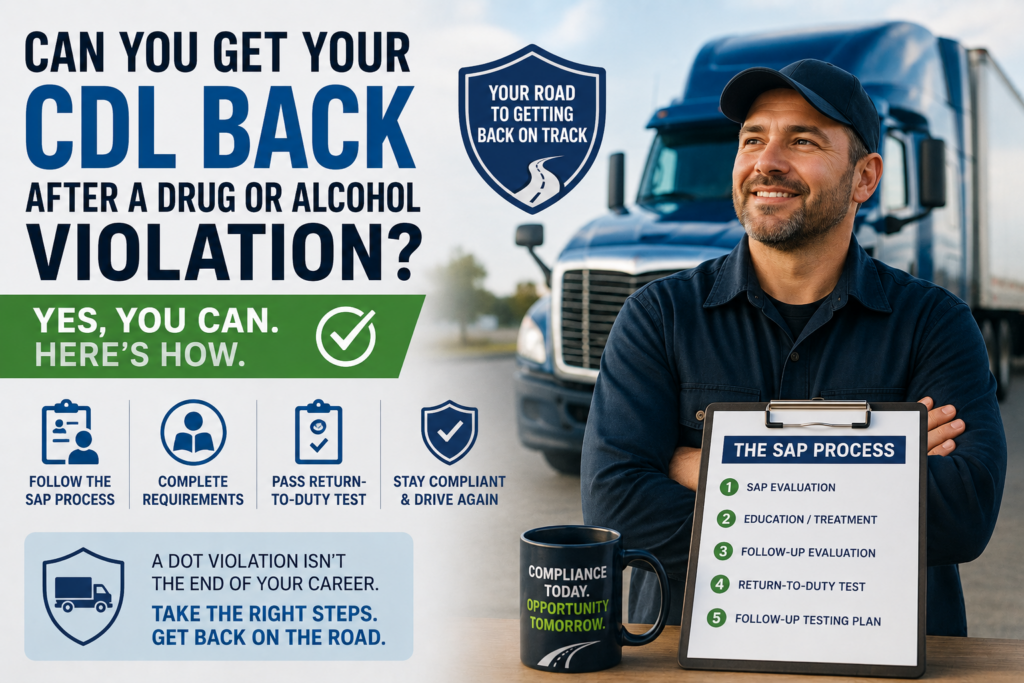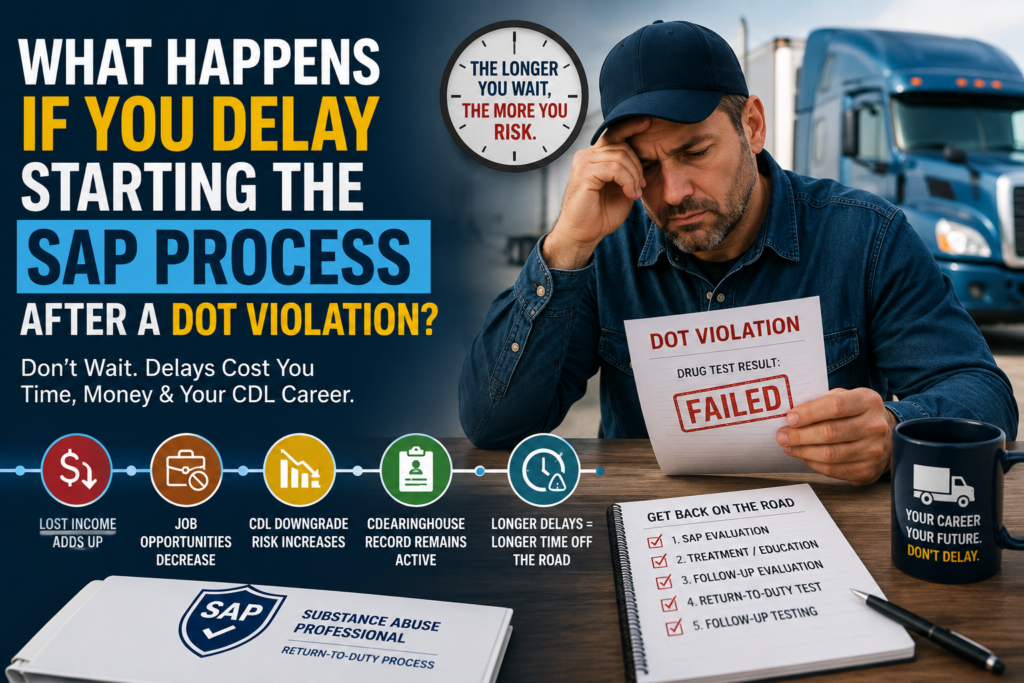
Completing the SAP process is a major milestone for any CDL driver who has experienced a DOT drug or alcohol violation. After finishing the required evaluation, education or treatment program, follow-up assessment, and return-to-duty test, many drivers believe the process is finally over.
However, there is another important phase that every driver must understand: follow-up testing.
Follow-up testing is a federally required part of the return-to-duty process designed to ensure continued compliance with DOT drug and alcohol regulations. While returning to work is a significant achievement, maintaining compliance after reinstatement is equally important.
In 2026, employers, regulators, and drivers are paying closer attention to follow-up testing requirements than ever before. Understanding how the process works can help you avoid violations, protect your CDL career, and maintain your eligibility for safety-sensitive work.
This guide explains everything CDL drivers need to know about follow-up testing after SAP completion, including how it works, how long it lasts, and how to stay compliant.
What Is Follow-Up Testing?
Follow-up testing is a mandatory testing program that begins after a driver successfully completes the SAP process and returns to safety-sensitive duties.
Unlike random testing programs that apply to all CDL drivers, follow-up testing is specifically assigned to individuals who have previously violated DOT drug and alcohol regulations.
The purpose of follow-up testing is to:
- Monitor ongoing compliance
- Support long-term accountability
- Promote public safety
- Reduce the risk of future violations
- Verify continued sobriety when required
It is not considered a punishment. Instead, it serves as an additional safety measure during the driver’s return-to-duty period.
Why Follow-Up Testing Is Required
The Department of Transportation requires follow-up testing because a previous violation indicates a need for additional monitoring before a driver can fully resume unrestricted commercial driving responsibilities.
Federal regulators recognize that returning to duty involves more than passing one test. Long-term compliance is critical for maintaining safety on the road.
The follow-up testing program helps ensure:
- Drivers remain compliant with regulations
- Employers maintain workplace safety standards
- Substance-related risks are reduced
- Public confidence in commercial transportation remains strong
This process is overseen under regulations enforced by the Federal Motor Carrier Safety Administration.
Who Determines the Follow-Up Testing Plan?
Many drivers assume that employers decide how many tests are required. In reality, the follow-up testing schedule is determined by the Substance Abuse Professional.
After evaluating the driver and reviewing their case, the SAP develops a customized follow-up testing plan.
The SAP considers several factors, including:
- Nature of the violation
- Substance involved
- Driver history
- Treatment participation
- Risk assessment results
- Overall compliance progress
This individualized approach ensures that each driver receives appropriate monitoring based on their specific circumstances.
How Many Follow-Up Tests Are Required?
Federal regulations establish minimum requirements for follow-up testing.
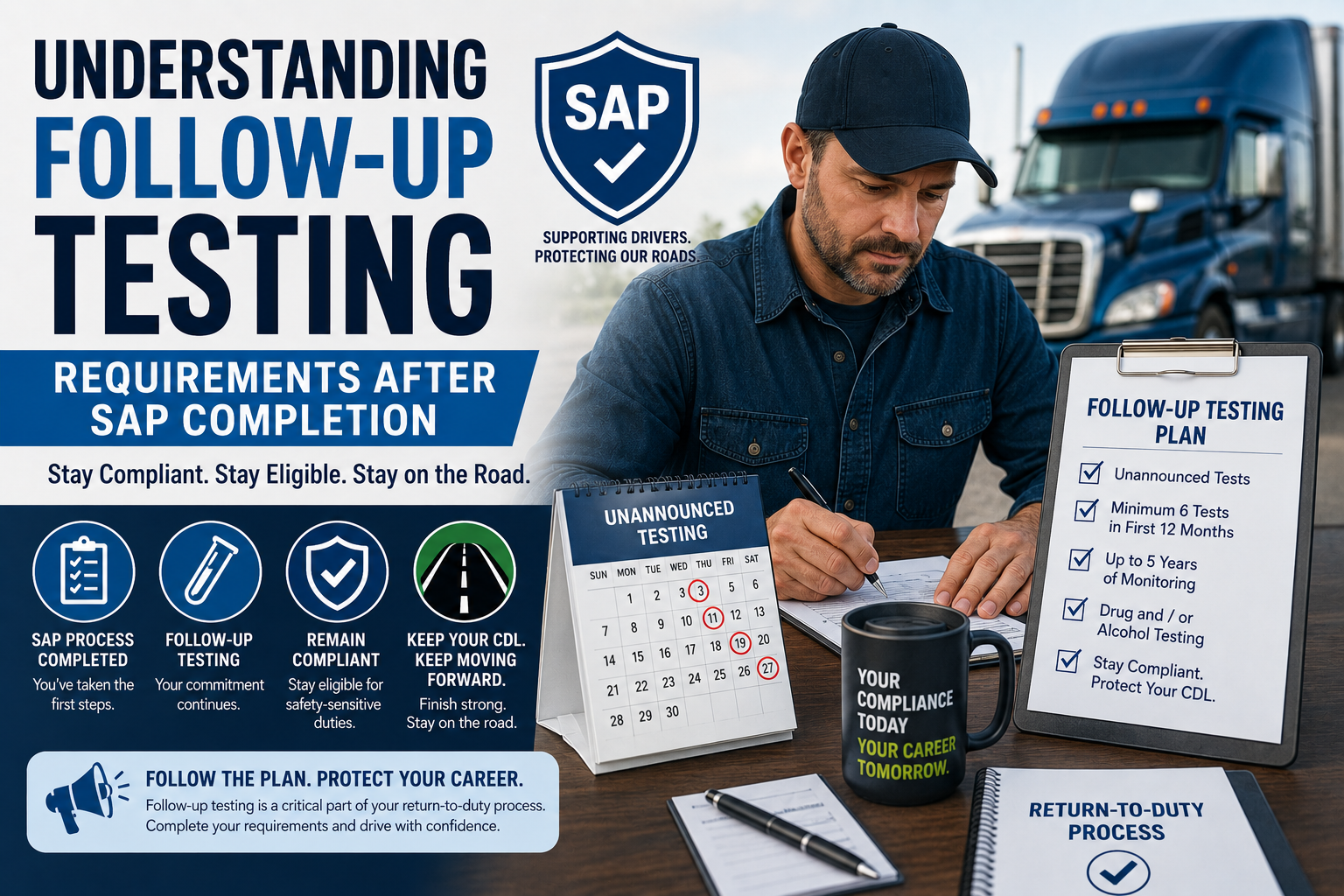
At a minimum, drivers must complete:
- At least six follow-up tests
- During the first 12 months after returning to duty
However, the SAP may require more than six tests depending on the situation.
In some cases, drivers may be assigned:
- Additional drug tests
- Additional alcohol tests
- Extended monitoring schedules
- More frequent testing intervals
The exact number varies from one driver to another.
How Long Does Follow-Up Testing Last?
Many drivers are surprised to learn that follow-up testing can continue long after they return to work.
Federal regulations allow follow-up testing plans to remain active for up to five years.
The SAP determines the duration based on:
- Evaluation findings
- Compliance history
- Treatment outcomes
- Risk factors
While some drivers may complete their follow-up requirements relatively quickly, others may remain under monitoring for several years.
The goal is to ensure long-term compliance rather than short-term success.
Is Follow-Up Testing the Same as Random Testing?
No. Follow-up testing and random testing are separate programs.
A driver who has completed the SAP process may be subject to both at the same time.
Random Testing
Random testing applies to all eligible CDL drivers and occurs through employer testing programs.
Characteristics include:
- Unpredictable scheduling
- Selection by random process
- Applies to all covered employees
Follow-Up Testing
Follow-up testing applies only to drivers who have completed the SAP process.
Characteristics include:
- Assigned by the SAP
- Specific to the individual driver
- Additional to random testing requirements
This means a driver could be selected for a random test and still be required to complete separate follow-up tests.
Are Follow-Up Tests Announced in Advance?
No.
One of the most important aspects of follow-up testing is that it is unannounced.
Drivers typically receive little or no advance notice before being directed to complete a test.
This helps ensure the integrity of the program and provides a more accurate assessment of ongoing compliance.
Because tests are unannounced, drivers should always be prepared to comply when notified.
Failure to do so can create serious consequences.
What Happens If You Miss a Follow-Up Test?
Missing a follow-up test can create significant problems.
Depending on the circumstances, failure to complete a required test may be treated similarly to a testing refusal.
Potential consequences include:
- Additional compliance reviews
- Removal from safety-sensitive duties
- New SAP process requirements
- Employment consequences
- Further regulatory action
Drivers should always take follow-up testing requirements seriously and respond immediately when notified.
How Employers Manage Follow-Up Testing
Employers play a critical role in the follow-up testing process.
Once the SAP establishes a testing plan, employers are responsible for implementing and managing the testing schedule.
Employer responsibilities include:
- Scheduling required tests
- Maintaining compliance records
- Ensuring testing occurs as required
- Monitoring completion status
- Supporting regulatory compliance
Employers do not generally have authority to reduce or eliminate SAP-assigned testing requirements.
The plan must be followed as established.
What Types of Tests May Be Required?
The type of follow-up testing depends on the driver’s violation history and SAP recommendations.
Testing may include:
Drug Testing
Drug testing is commonly required when the original violation involved prohibited substances.
These tests may screen for:
- Marijuana
- Cocaine
- Amphetamines
- Opioids
- PCP
Alcohol Testing
Alcohol testing may be required when alcohol-related violations were involved.
Testing may include:
- Breath alcohol testing
- Other DOT-approved alcohol screening methods
The SAP determines which testing methods are appropriate.
Can Follow-Up Testing End Early?
Many drivers hope that strong performance or a clean record will allow follow-up testing to end ahead of schedule.
Generally, the testing plan established by the SAP must be completed as assigned.
Employers cannot simply decide to stop testing because a driver has remained compliant.
The plan remains active until:
- Required testing is completed
- Monitoring requirements expire
- Regulatory obligations are satisfied
The best strategy is to focus on full compliance rather than looking for shortcuts.
Common Misunderstandings About Follow-Up Testing
There are several misconceptions that often create confusion among CDL drivers.
Myth 1: Passing the Return-to-Duty Test Ends the Process
The return-to-duty test is only one step in the overall compliance journey.
Follow-up testing begins after return-to-duty clearance.
Myth 2: Follow-Up Testing Is the Same for Everyone
Every plan is customized by the SAP.
Some drivers receive more intensive monitoring than others.
Myth 3: Employers Can Remove Testing Requirements
Employers must follow SAP recommendations and federal regulations.
They cannot simply eliminate required testing.
Myth 4: Violations Disappear After Returning to Work
Compliance obligations continue after reinstatement.
Drivers must remain committed to meeting all testing requirements.
How to Stay Compliant During Follow-Up Testing
Successful drivers take a proactive approach to compliance.
Some best practices include:
- Keep contact information updated
- Respond quickly to employer notifications
- Understand your testing requirements
- Maintain a professional attitude
- Avoid situations that could create compliance concerns
- Keep records of completed testing when appropriate
Consistency and accountability are key to successful completion.
Why Compliance Matters for Future Employment
Today’s trucking employers place significant importance on compliance history.
Drivers who complete follow-up testing successfully demonstrate:
- Accountability
- Professionalism
- Commitment to safety
- Regulatory compliance
These qualities can improve future employment opportunities.
On the other hand, failing to comply with follow-up testing requirements can create additional obstacles when seeking new positions.
Employers value drivers who successfully complete the entire SAP and follow-up testing process.
The Long-Term Benefits of Completing Follow-Up Testing
Although follow-up testing may feel burdensome, successful completion offers important benefits.
These include:
- Continued CDL eligibility
- Improved employment prospects
- Demonstrated compliance history
- Increased employer confidence
- Stronger professional reputation
For many drivers, follow-up testing becomes an opportunity to rebuild trust and move forward confidently in their careers.
Conclusion
Completing the SAP process is a major accomplishment, but it is not the final step. Follow-up testing remains an important part of the return-to-duty journey for CDL drivers who have experienced a DOT drug or alcohol violation.
Understanding your testing requirements, complying with every scheduled test, and maintaining a commitment to safety are essential for long-term success.
While follow-up testing may continue for months or even years, it serves an important purpose: helping drivers demonstrate ongoing compliance and protecting public safety.
By taking the process seriously and working closely with your employer and SAP provider, you can successfully complete your follow-up testing requirements and continue building a successful CDL career.
Need Help Navigating the SAP Process?
Our certified SAP team helps CDL drivers understand every stage of the return-to-duty process, including follow-up testing requirements.
We provide:
- Same-day SAP evaluations
- Virtual and in-person appointments
- DOT-compliant guidance
- Step-by-step support throughout the SAP process
Contact us today to start your SAP evaluation and move one step closer to getting back on the road with confidence.